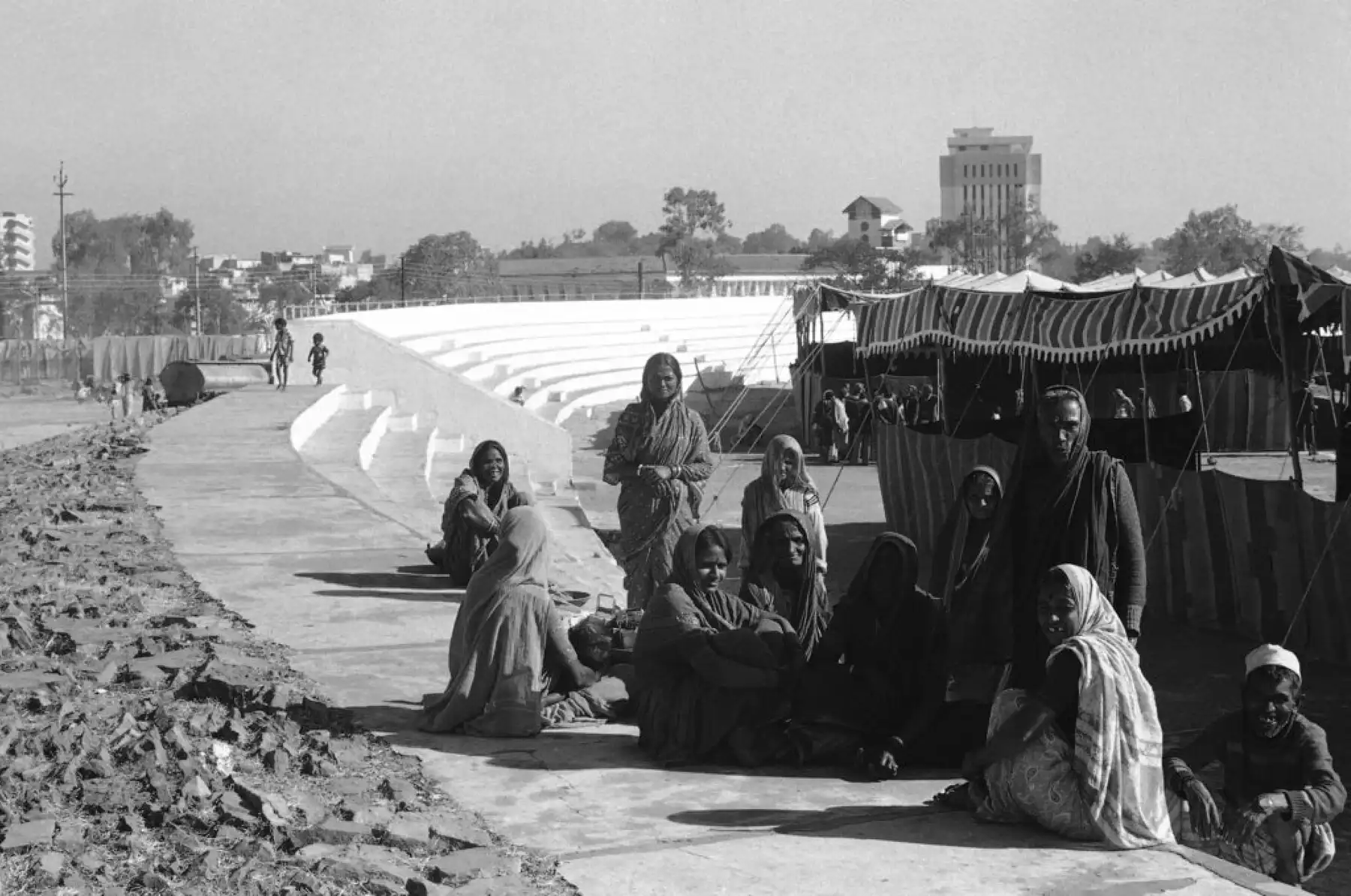
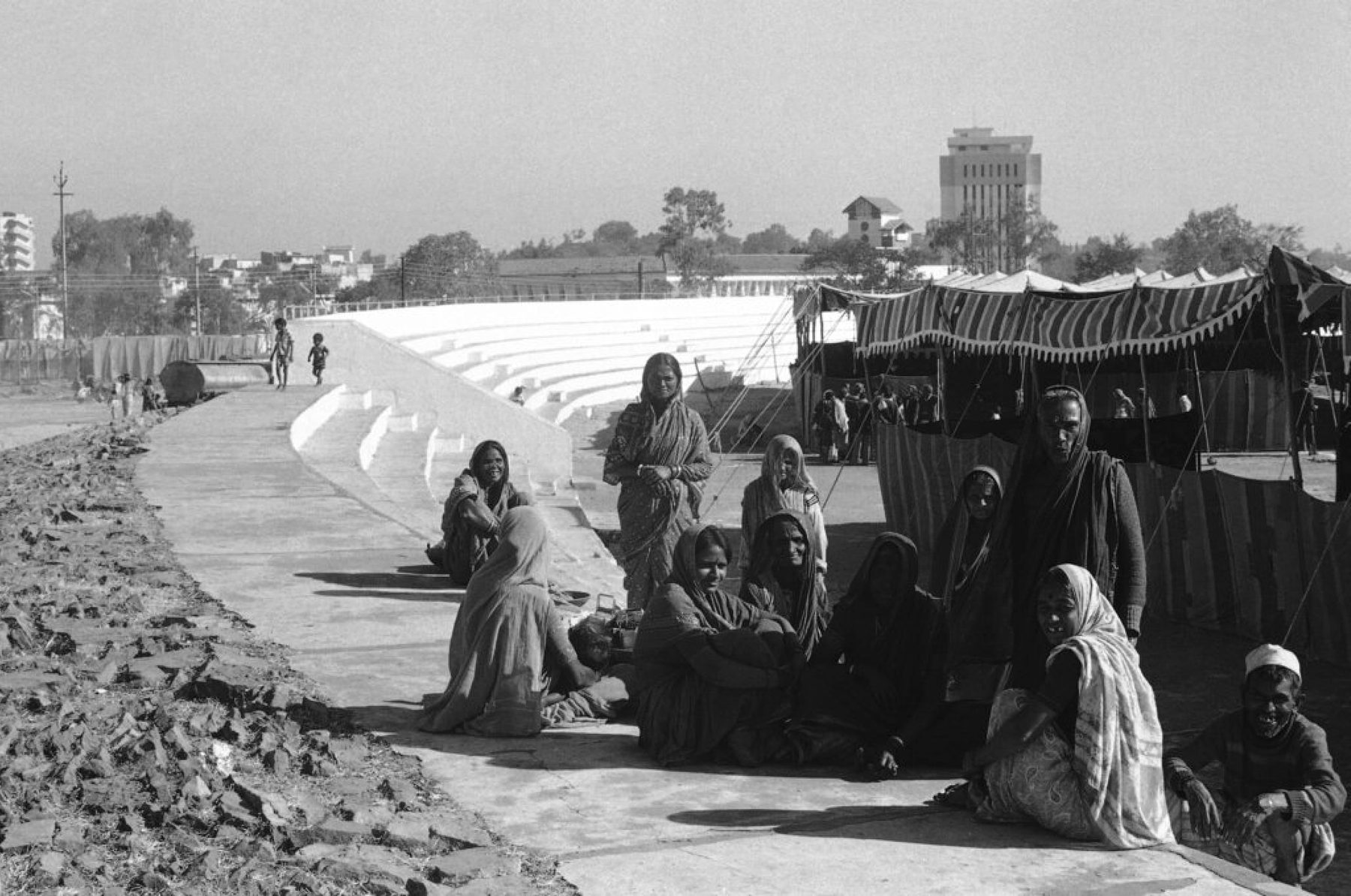
Evacuated residents in makeshift refugee shelters during the Union Carbide Disaster in Bhopal
In this photo, we see a limited amount of residents, since most had left the town as a whole, bundled up in makeshift refugee shelters in the Bhopal city stadium.
More about the stories of the large number of evacuees, the government response and the disaster that killed over 3000 people, and affected more than half a million, can be found in Chapter 8, India’s Environment 1984-85.
Source caption
Refugee shelters at the main city stadium in Bhopal house only a few people as most of the evacuated residents fled Bhopal because they felt it was not safe to be in the city during the operation to render the remaining toxic gas harmless, Dec. 15, 1984. (AP Photo)
How to cite
Associated Press. "Evacuated residents in makeshift refugee shelters during the Union Carbide Disaster in Bhopal." Photograph, 15 December 1984. AP Newsroom, item 3dd0049595a34fdf874c3a570b51793b. https://newsroom.ap.org/editorial-photos-videos/detail?itemid=3dd0049595a34fdf874c3a570b51793b&mediatype=photo
Indian Exceptionalism Photograph Collection. "Evacuated residents in makeshift refugee shelters during the Union Carbide Disaster in Bhopal." Accessed [accessed date]. https://indianexceptionalism.com/archive/ie-0019/
- Credit
- Associated Press
- Source
- newsroom.ap.org
- Access
- Rights status undetermined. Reproduced here for study and commentary. Contact the curator regarding rights.
- Original
- 2048 × 1358 px